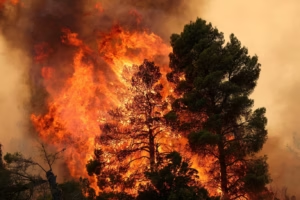
Sabina Lawreniuk || In August 2016, the International Geological Congress in Cape Town heard a recommendation from one of its own working groups to declare a new epoch. Twelve thousand climate stable years during the Holocene, it heard, have given way to the Anthropocene, recognising the profound impacts of humanity — including anthropogenic climate change — on Earth. Dating the start of the Anthropocene epoch to 1950,’ the chair of the Working Group on the Anthropocene reflected at the time that “we have lived most of our lives” – if, for many of us, not all — “in something called the Anthropocene and are just realising the scale and permanence of the change” (Carrington, 2016).
If Professor Zalasiewicz’s comments suggest that our collective impacts have thus far been unwitting, this remains the case no longer. Instead, argues Goodman (2017), “the corollary of the wide acceptance of a geological Anthropocene is the emergence of a new form of self-aware climate agency”, as collectively and individually we live with a greater degree of awareness, understanding, and introspection regarding our impacts on planetary machinery. As these introspections trigger public debate across diverse outlets including the Guardian, NBC News and CNN about the “overwhelming and terrifying” (Taylor & Murray, 2020) experience of “eco-anxiety” (Nugent, 2019) and “climate grief” (Scher, 2018), understanding “what kind of social action” our self-aware state of “climate agency” might provoke is, according to Goodman (2017), “the critical question of our era”. Here, he asserts, “the question of climate change and social movement participation is centrally important”; perhaps especially so for building public and political will for the societal and economic shifts required to address ongoing climate breakdown. In particular, he writes, we need to understand “to what extent is something that we can characterise as ‘climate agency’ emerging through social movement participation?” (Goodman, 2017).
In the few years since Goodman posed his question, the answer has seemingly become clearer as the international media spotlight has fallen on the climate activism led by Greta Thunberg’s Friday for Future movement and Extinction Rebellion (XR). Both have become unlikely household names within a relatively short 24-month period, spearheading movements that now number in the millions. Yet they have more in common than publicity. Both have been accused of forwarding a Northern, urban and elite perspective on the climate crisis whilst demographics bearing the brunt of our unfolding climate catastrophe have to date cut a startlingly quiet figure in analyses of emerging climate resistance. As this chapter argues, however, rather than being absent, the climate agency of subaltern groups in the global South whose homes, livelihoods and ways of life are already being eroded and undermined by climate breakdown is systemically overlooked in contemporary media and academic discourse.
Here, I use a refraining of Goodman s question as a starting point, seeking to move the conversation on climate resistance beyond the usual, high-profile agents, to ask: what forms of climate agency and social movement participation are emanating from those on the frontline of the climate crisis? I ground this analysis in an unlikely locus of nascent climate rebellion: a wave of labour protest that hit Cambodia’s garment industry across the years 2013 and 2014. Over December 2013 and January 2014, mass rallies brought hundreds of thousands of workers and their allies on to the streets to demonstrate for better urban wages. These demonstrations took place at a charged moment in national mood, as electoral upsets and real wage deterioration converged to create a moment of heightened political and economic tension (Lawreniuk, 2020; Arnold, 2017).
Nonetheless, the simultaneous impact of concurrent severe weather shocks in 2013 has been overlooked as a trigger for the eruption of labour agitation. Although Cambodia’s farmers are familiar with unpredictable weather patterns and events, severe floods and droughts that year propelled Cambodia to an unenvied status as the world’s second-most climate-vulnerable country (Kreft, Eckstein, Junghans, Kerestan, & Hagen, 2015), compounding the slower violence of climate breakdown already undermining agricultural livelihoods in Cambodia. Using testimony from workers and trade unions gathered in the years following the disorder that identifies the effects of the changing climate as a perhaps unlikely driver of worker mobilisation, I draw on this context to show how the origins of the protests reflect a candid synthesis of labour resistance and climate agency in the South. In this understanding, climate agency refers to resistance enacted against the conditions in which labour takes place under climate change. Thus, it means resistance to climate change not as a global phenomenon, but as it manifests in everyday livelihoods and through labour relations. Climate change shapes circumstances that are themselves resisted. That single level of removal does not invalidate the wider implications of resistance.
To make this case, the chapter is structured in four further parts. The first section briefly reviews the literatures on climate agency and labour resistance. Here, 1 argue that the technocratic framing of the climate crisis in mainstream discourse, embodied as it is in the logic of the Anthropocene narrative, has contributed to the parallel rather than symbiotic development of these literatures. Instead, I propose the alternative concept of the Capitalocene (Moore, 2017, 2018) as a better means to foreground the linkages between the crisis of the biosphere and the crisis of productive and reproductive work in the current conjuncture. Next, I illustrate the empirical resonance of this theoretical rapprochement in the South, exemplifying the Capitalocene’s convergence of economic and environmental crisis in driving patterns of spatially disaggregated or translocal labour and livelihoods systems that cross-cut and complicate the conventional rural-agricultural and urban-industrial divide. Third, I adopt a nuanced reading of the 2013/14 protests in Cambodia’s garment sector, to show how translocal livelihoods have given rise to forms of translocal resistance and translocal solidarities that privilege neither urban-industrial nor rural- agricultural conditions in their genesis. Finally, I finish with a conclusion that draws together key findings and contributions.
Conceptualising climate agency in the Capitalocene
Since Goodman (2017) first enquired about the extent to which “something that we can characterise as ‘climate agency’ [is] emerging through social movement participation”, the answer to this “critical question of our era” has become somewhat clearer. Within a relatively short period, there has been an explosion of interest in climate movements heightened by the antics of global-scale organisers such as XR and Greta Thunberg. In particular, Thunberg’s “Fridays for Future” school strikes have triggered a wave of youth protest in more than 150 countries (and counting) around the world, implanting climate activism or “climate resistance” (Hunter, 2019) firmly in public consciousness.
Where the academic literature has engaged with these movements, however, it has reproduced criticisms levelled at the movements themselves. XR’s focus on the diminishing futures of “our children” – as the UK-founded organisation frames it, for example — has attracted concern which argues that it unhelpfully distracts attention from the global South communities already facing climate catastrophe. “Does Extinction Rebellion have a race problem?” asks the Guardian newspaper (Gayle, 2019). “Too white, too middle class”, answers CNN (Lewis, 2019). Mirroring these issues, the academic literature has, similarly, coalesced predominantly on case studies and key groups that organise in urban and northern (e.g. Thew, Middlemiss, & Paavola, 2020; O’Brien, Sel- boe, & Hayward, 2018; Roser-Renouf, Maibach, Leiserowitz, & Zhao, 2014) locations, leaving the climate activism of rural, Southern communities under- studied. In this latter respect, indeed, “though scholarship addressing these questions on social movement participation and climate change exists, the field undoubtedly remains”, as it did at the time of Goodmans question, “relatively underdeveloped” (Goodman, 2017).
Although there are notable exceptions such as Uganda’s Vanessa Nakate, Ecuador’s Helena Gualinga, and India’s Vandana Shiva, the lack of prominence afforded to Southern, non-white, and rural voices is puzzling. Although climate change affects us all, it affects us irregularly. “The Apocalypse is indeed”, as Swyngedouw (2013, p. 11) observes, “a combined and uneven one, both in time and across space”. Rural areas in the global South will – indeed, are already — bearing one of the highest burdens of anthropogenic climate change. As the vanguard of climate impacts, we might conversely expect to see a greater share of climate resistance emanating from these locations; an ecological flexing of Polanyi’s (2001 [1944], p. 136) “double movement”, referring to the simultaneous extension of and resistance to encroaching markets characterising capitalist transitions. The issue, then, is whether the literature is overlooking existing climate resistance in the rural South, or whether that resistance is somehow being impeded in its fomentation.
This North South imbalance reflects a rural-urban divide also. Rural areas are viewed, overwhelmingly, as the passive recipients of the impacts associated with the changing climate, yet far less is said about the voices raised against such developments and degradations. Given the intuitive association between climate change and the rurality, this is a startlingly consistent trait in the literature. Yet it is not one characteristic of climate scholarship alone. Rather, in a set of mirrored shortcomings, the labour geography literature — within which questions of agency are debated in great volume and with a great deal of energy – has little itself to say about climate change. This crucial nexus, appears invisible, therefore, from both sides.
Indeed, as people in the South have been drawn in their millions into industrial work, the labour geography literature has corrected a once “top-down” (Cumbers, Helms, & Swanson, 2010, p. 51), “capital-centric” (Coe & Jordhus- Lier, 2011, p. 221) approach to the expansion of global production. Here, the sub-discipline has performed crucial work highlighting the vital force of labour agency, showing how workers (re)make space through circuits of capital (Herod, 1997). Nonetheless, despite the field’s rapid growth over two decades there remains a “dearth” (Natarajan, 2020) of scholarship that explores labour in relation to the environment, as labour geographers have maintained a “conspicuous silence” (Parsons & Natarajan, 2020) on climate change, particularly in grounded, local-level analyses (Mikulewicz, 2020). Thus, “despite the inevitable impact of climate change and climate change measures on the production process and thus on work” — and vice versa — the two literatures on climate and labour agency have evolved independently: “environmental studies have largely ignored labour issues, while labour studies have paid little attention to climate change issues” (Rathzell & Uzzell, 2011, p. 1215).
In part, this reflects the lingering hypothesis of a contingent empirical relation in which the interests of work and the climate are posited as antithetical, fuelling the continuation of this divergent trajectory of intellectual development through reification of a tired “jobs versus environment” narrative (Rathzell & Uzzell, 2011). Yet as the growing calls for a Green New Deal on both sides of the Atlantic attest, this is an abstraction, rooted in the false logic of mainstream scientific, techno-managerial framings of climate change and its impacts. As Swyngedouw (2011, p. 2) has cautioned, the global rise in anxiety’ about the planet has occurred in a conspicuously conservative guise, in which “ecology” manifests as a “new opium for the people”: “a gigantic operation in the depoliticization of subjects”. Mainstream responses to the crisis of the present conjuncture that emerge from this post-political milieu “seem only to promise further entrenchment of neoliberal economic policies” (Johnson et ah, 2014, p. 440). For example, by framing responsibility for averting climate catastrophe as resting upon behavioural change to the consumption choices of individuals – buy differently, fly less – and thereby conveniently obfuscating the role of corporations and complicit governments in fuelling disaster. As such, these responses merely provide a buttress to steady the status quo into the uncertain future that lies ahead, rather than provoke the disruption needed to confront an “ecological Armageddon” which is “already a reality” (Swynge- douw, 2013, p. 11).
The notion of an Anthropocene epoch, as introduced at the outset, embodies this post-political tendency. Whilst working to sound “the alarm of planetary crisis” (Moore, 2018, p. 237), it offers little prescription for extinguishing the fire. The Anthropos, its anchoring concept, revels in the post-political haze, such that within it “the human species becomes a mighty’, largely homogeneous, acting unit” from which “inequality, commodification, imperialism, patriarchy, racism and much more . . . have been cleansed” (Moore, 2017, p. 597). Unravelling the multiplicity of human difference shrouded under the banner of the Anthropos reveals the Anthropocene as a “colossal falsification”: in which global climate change is “not the accomplishment of an abstract humanity” but “capitalogenic” (Moore, 2018, p. 237). In this way, the “non-political politics” (Swyngedouw, 2011, p. 1) of the Anthropocene moment thus work to disavow the role of capitalism in climate change, erasing the material foundations of our unfolding planetary catastrophe.
Instead, Moore (2017, p. 596) argues, the term “Capitalocene” might be a more appropriate epithet for the epoch otherwise known as the Anthropocene. This alternative nomenclature signals a conceptual shift that recognises we do not inhabit the “ ‘age of man’ — with its Eurocentric and techno-determinist vistas” but the “ ‘age of capital’ — the historical era shaped by the endless accumulation of capital” (Moore, 2017, p. 596). This conceptual regrounding is significant because it allows for a rapprochement of the two converging crises that define our age, acknowledging that “the ‘economic’ and ‘environmental’ problems of the present conjuncture are constitutively joined” (Moore, 2017, p. 602). Indeed, the Anthropocene’s insistence on a false binary’ between nature and society gives rise, as Moore describes (2018, p. 269), to “a kind of labor fundamentalism and nature fundamentalism”. It is this essentialism that is reified in the so-called “jobs versus environment dilemma” (Rathzell & Uzzell, 2011). By contrast, the logic of the Capitalocene with its insistence that ecological breakdown is capitalogenic insists on a dissolution of this binary, demanding recognition that labour and the environment are, indeed, linked and acknowledging “the degradation of nature as a specific expression of capitalism’s organization of work” (Moore, 2018, p. 270).
Given these interlinkages, the parallel conceptual development of the literatures on climate and labour agency in geography requires bridging. Indeed, this is an initiative of not only’ theoretical but practical importance. As Moore
(2017, p. 270) contends, to avert catastrophe in a world facing crisis on two fronts requires “articulat[ing] a politics that links the crisis of the biosphere and the crisis of productive and reproductive work”. However, whilst Moore laments that such a red-green synthesis is generally elusive, in what follows I identify the shoots of this union in the labour politics of Cambodia’s garment industry. Indeed, subaltern groups in the global South shoulder the heaviest burdens of the Capitalocene’s twinned crises, experiencing both extreme economic precarlty and climate precarity, which hampers industrial and agricultural fortunes alike. In what follows, I show how the interacting influences of these twinned crises shape translocal systems of labour and livelihoods in the South. I then move to consider how these systems produce organic expression of translocal solidarities, where concerns about unstable livelihoods in an uncertain climate may find expression in subaltern labour politics.
Beyond the rural-urban dyad: translocal labour and livelihoods in the Capitalocene
In their search for an “emancipatory rural politics” in the South, Scoones et al. (2018, p. 5) note that “youth have been historically at the forefront of movements of progressive renewal, and of new ways of doing politics, challenging authority’ as the ‘vanguard of change’. Given the intergenerational justice concerns that skewer the motives of climate resistors (see Thew et al., 2020) — exemplified by the youthful mobilisation of Greta Thunberg’s army of school strikers and XR’s concerns for “our children” alike – there is particular impetus to look to youth as the “vanguard of change” in the South, spearheading resistance against the ongoing climate crisis. However, as Scoones et al. (2018, p. 5) also observe across the rural South, the hybrid functioning or authoritarian control of democratic and civil spaces can work to “suppress autonomous political mobilization”, co-opting or incapacitating potential youth agitators. Moreover, there are other factors at work here, too, obstructing the potential of youth climate resistance in the rural South. Scoones et al. (2018, p. 5) further note that “changing rural demographics and labour relations . . . have been affected by and in turn have affected the politics of the countryside”, including “the aging of the farm population” leading to an “exodus of young people” to work in cities or across borders.
The implications are clear: if we are looking for an upswing in youth mobilisations related to climate change; aging rural zones might be the wrong place to start. Scoones and his colleagues (2018, p. 4) link the exodus of youths, in particular, to “processes of financialisation particular to contemporary neoliberal capitalism” that have withered land holdings and farm profits through aggressive tactics of enclosure. Though a valid proposition, the veracity of this narrative is nonetheless circumscribed. It is, at best, a partial truth. For in many parts of the South the out-migration of youth faced with unviable rural livelihoods is not driven by the incursion of market forces alone but also by the worsening impacts of climate change (Natarajan, Brickell, & Parsons, 2019). Where agricultural fortunes now “depend on the sky” (Bylander, 2015) amidst the vagaries of weather patterns in a changing climate, economic and ecological crises converge and intensify, exemplifying the cruel logic of the Capitalocene.
Recognising the convergence of these twinned crises is vital as it upends a persistent rural-urban dyad that characterises thinking on both climate change and labour. The assumption remains prevalent that rural areas experience climate change whilst urban areas promulgate it. Yet recent work (Lawreniuk & Parsons, 2020; Gidwani & Ramamurthy, 2018; Etzold, 2016) spanning the mobilities, migration and development studies literatures has increasingly problematised its validity, demonstrating instead how migrants and household economies alike retain a foothold across rural and urban camps long after the former have “departed” rural areas. Rather than being cleanly separated from their rural roots when they move to the city’, urban migrants remain durably connected to their home and origins through networks and flows of people, ideas, information and resources. Rural-urban labour mobility in the South has therefore taken on a “translocal” character, whereby the dynamic interconnections of spatially distant families and communities permit a “simultaneous situatedness across distant locales”, sustaining a “groundedness during movement” (Brickell & Datta, 2016, p. 4). All manner of apparently distant events resulting from chronic pressures and idiosyncratic shocks are relayed and trans- locally experienced within the “stretched lifeworlds” (Rogaly & Thieme, 2012, p. 2086) that urban workers and their rural households mutually inhabit.
In Cambodia, for example, where the next section of this chapter turns, migrants remain active participants in translocal household livelihood arrangements. As well as returning home to contribute farm labour during peak seasons of agricultural demand, their regular flows of urban-earned income support investment in — and often sustain the very viability of – smallholder agriculture (Parsons, Lawreniuk, & Pilgrim, 2014). In this way, variations in agricultural conditions become a cornerstone of the translocal household economy’ as chronic climate pressures and acute shocks upon farm livelihoods reverberate over the rural-urban continuum, impacting upon workers’ urban livelihoods via the translocal networks in which they are embedded. Rural floods and droughts are thus experienced in many cases as much by’ factory workers as by their smallholder farming parents, grandparents and siblings.
Scholarship on deliberative livelihoods strategies and remittance practices in the South thus increasingly’ recognises how the translocal nature of labour and livelihoods in the Capitalocene is channelled into distinct forms of labour agency. Nonetheless, how these translocal underpinnings of labour agency feed into instances of voluble labour protest and direct action have rarely been explored. Instead, “the dominant epistemology of agency . . . rests on assumptions about the activities and sites that ‘count’ in analyses of labour” (Strauss, 2018, p. 1). Here, the “conspicuous silence” (Parsons & Natarajan, 2020) of the labour geography literature on the subject of climate change is perpetuated by’ a persistent industrial bias within studies of labour activism (Barrientos, 2013; Wad, 2013; Bezuidenhout & Buhlungu, 2011). Scholarship has focused on spotlighting “collective” (Carswell & De Neve, 2013) and “vertical” (Neil- son & Pritchard, 2010) forms of agency levelled “upwards” through the supply chain, obfuscating the “horizontal” agency reflected in and shaped by worker’s embeddedness in household and community relations.
Seeking a counterpoint to this analytical dualism, the next section of this chapter highlights manifestations of translocal agency obscured by this industrial focus. To do so, I explore workers’testimony on the triggers of mass labour protests that erupted across Cambodia’s garment sector in the year 2013/14. I draw from a series of more than 25 interviews and 10 FGDs with respondents introduced by an independent union organisation with garment workers at Canadia Industrial Park in Phnom Penh, the factory enclave at the centre of the 2013/4 unrest, as well as conversations with workers’ household members, neighbours and local market traders and street sellers in the vicinity of the site. Building from this investigation of grassroots experiences and drivers of the protests, further interviews with local and national level union leaders from different sectors — including garment manufacturing, food and services, informal transport workers, a farmers’ association and more — allow for an examination of the wider organisation of the minimum wage campaign that led to the demonstrations and their unfolding. These two primary rounds of research took place between July and November 2015, although I revisited the site for further data collection in 2016 and since. Pulling together commentary from across this sample of lay workers and union leaders, in what follows I call attention to how horizontal expressions of climate agency resonate in labour activism. As these testimonies show, this ostensibly “urban” protest movement was motivated, at least in part, by the compound impact of rural and environmental pressures on industrial wages, giving rise to novel forms of translocal solidarity.
Towards translocal solidarities: locating climate agency in labour resistance
“By the time I got to Canadia [Industrial Park], I could already see blood on the ground, so I knew that something violent had happened”, recalled Kunthy (24, garment worker, 13 July 2015), a garment worker, of returning to the factory enclave in Phnom Penh that became the epicentre of labour protests engulfing Cambodia’s capital at the very end of 2013. Following “a wave of strikes [that] shut down Cambodia’s entire garment industry between 24 December 2013 and 3 January 2014” (Arnold, 2017, p. 30), military police intervened to resolve the standoff Kunthy arrived home in the midst of the confrontation. “As I was driving through, there was fighting all round”, she described. “The protestors were throwing stones at the police. The police used shock guns and some were firing real guns.” By the end of the day, at least four striking workers had been killed, a further 38 hospitalised with serious injuries, and 23 arrested (AMRC, 2014). The largest labour strikes in Cambodia’s history, bringing hundreds of thousands of workers on to the streets of the capital, thus ended in one of the bloodiest days of Cambodia’s post-war peace.
Dovetailing with a period of wider social unrest after disputed national elections that had taken place in July 2013, the trigger for the 2013/14 strikes was a decision by Cambodia’s Labour Advisory Committee over May and December 2013 to increase the minimum wage in the garment sector — which remains the only industry in Cambodia to command a mandated minimum wage – from US$61 to US$80 and then $95 per month. Although ostensibly an improvement to workers incomes, the proposed rate of increase only restored real wage levels to those seen 13 years earlier (Arnold, 2017). Over the same period that real wages had stagnated, consumer inflation rocketed, with food prices in particular ratcheting up 147.7% between 2003 and 2015. Set against an offer made by the opposition Cambodian National Rescue Party over the fractious election campaign to more than double the minimum wage for the sector to $160, the government’s own ineffective increase sparked a tinderbox of pent-up frustration from workers over a decade of stalled livelihoods and life chances. Nonetheless, the scale to which the strike action spread in a short period after igniting on 24th December 2013 was more remarkable for its apparent spontaneity – “an autonomous strike by rank-and-file workers who initiated actions and participated in them without instructions by union federations” (Arnold, 2017, p. 30).
Though scholarship has highlighted the twin convergence of both national political crisis and micro scale urban economic contraction that propelled the general strike of 2013 (Lawreniuk, 2020; Arnold, 2017), there is a third, often overlooked (cf. Lawreniuk & Parsons, 2018), catastrophe that occurred thatyear, fanning the flames of the unrest. This final, crucial, crunch came in the form of ecological catastrophe, where a “severe monsoon season, which induced heavy rainfall and widespread flooding throughout a country that was still recovering from the damage of previous year’s floods” (Kreft et al., 2015, p. 7), tilted the already precarious balancing of translocal livelihood systems further towards the precipice of collapse. Cambodia’s farmers – in a nation acknowledged as “among the most vulnerable countries” (Ministry of Environment, 2016) to climate change — weather wide-ranging climate shocks most years. However the compound impacts of 2013’s floods were so unusually severe as to drive Cambodia to an unfortunate second place in the Global Climate Risk Index’s annual ranking of countries most affected by extreme weather events (Kreft et al., 2015). By contrast, Cambodia had ranked a relatively low 65th in the preceding year (Kreft & Eckstein, 2014).
Thus, whilst discussions over the appropriate minimum wage for the sector focused on calculating living wage levels to meet the consumption needs of individual workers and their immediate nuclear households — with the Ministry of Labour’s own calculated living wage range for 2013 of $157-$ 177 studiously glossed over in its own offers (AMRC, 2014) — a crucial dimension was missing: the strain placed on worker’s urban incomes that year, and others, from the stuttering agricultural livelihoods of rural-based family. As is often elided in the estimations of outsiders, as much as 50% of workers’ salaries are remitted elsewhere immediately upon receipt (Care, 2017; Parsons et al., 2014), sent to aid rural families in smoothing-over consumption needs and investing in agrarian inputs, leaving urban workers to subsist on far less than most realise or imagine possible. This remitted amount is not fixed but fluctuates according to shifting axes of poverty, need and want — on both sides. When garment orders slow or overtime is scaled back, “in the home village, they adapt and spend very little” in turn (Thida, 27 years, 17 July 2015).
It is a system that helps to account for the vagaries of income on both sides, but the price of flexibility is greater for some than others. As Malea, another garment worker, explained, “if a garment worker’s family is very poor, then it is very difficult for them to find the money to support both themselves and their household” (Malea, 27, garment worker, 22 July 2015). When rural incomes and livelihoods are squeezed, the force of the pinch is transmitted to urban workers, like Rithy, who “have to send a lot of money, so they have to borrow money from somebody in the city and then they need to do overtime the next month in order to pay it back” (Rithy, 27, garment worker, 16 July 2015). Here, contemporary research shows how agricultural production and social reproduction on both sides of the rural-urban continuum are being shored by recourse to microcredit (Natarajan et al., 2019; Green, 2020). Yet as Cambodian borrowers have leveraged the highest per capita rate of microfinance loans in the world over the past two decades — at almost $4000, more than double GDP per capita (Licadho, 2020) — liabilities are increasingly unsustainable. As a result, borrowing further undermines rather than buoys households’ ability to stay afloat through periods of distress.
Indeed, during difficult periods following chronic and acute shocks, the prevailing state of agricultural precarity can tip even seemingly secure translocal livelihoods into perilous positions, demanding unsustainable levels of urban-to- rural remittance. As one worker explained “My family is average, so it is okay for me, but it is very difficult when there is no rain because I need to send a lot of money. . . . Workers from poor families have a very difficult life because they send everything home and then have nothing left” (Rany, 22, 15 July 2015). A bad year’s rain and subsequent poor harvest can therefore place excoriating demands on the precarious juggling of urban earned incomes. For the best off, this might mean inconvenience; for the worst off, it bodes calamity. Where microfinance loans are typically secured against land titles for either agricultural or more concerningly homestead lands, failure to generate sufficient income to cover repayments at rapacious rates of interest threatens distress land sales (Green, 2020) and entry into bonded labour (Natarajan et al., 2019).
Thus when Cambodia’s garment workers protested in 2013/14, their motivations ranged beyond the deteriorating conditions of their immediate urban situation to include compounding pressures placed on translocal livelihoods by the unusually severe climate shocks experienced over the same period. This is clear in workers’ testimonies of the strike action, where the burden of sustaining the family farm through the impacts of 2013’s extreme weather events is cited as a catalyst in workers’ decision to protest; an expression of resistance to increasingly climate change-impacted livelihoods that served to stir the fomentation of labour unrest. Chenda, for example, participated in the 2013/14 industrial action alongside her colleagues from one of the garment factories located in the Canadia Industrial Park, where the January violence ignited.
“The factor that made me protest”, she outlined, highlighting the entanglement of urban and rural precarity, “is that the salary is not enough to live and send money home. Now I have to send less, but it is not enough for my family. They need to buy fertilizer and many [other] things. If there isn’t enough money then I have to borrow it from somebody else. Then I have to spend less next month to pay them back and send less money home [again| too”. (Chenda, age 24, 21 February 2015)
As an uncertain environment pushes farmers to invest ever more capital in inputs such as these, as well as borrow more to fund these contributions, farmers and their urban relatives experience agricultural shocks as economic as well as climatic. According to Srey Pov, another worker who took part in the Canadia demonstrations, the strike occurred “because workers’ families were generally farming badly, so they had to buy fertiliser and everything. It costs a lot and it is hard for the workers to send enough money” (Srey Pov, 29, garment worker, 22 February 2016).
In the intervening years, this recognition of the interwoven dependencies of urban and rural, farm and non-farm, global economy and local climate, that shape translocal experiences of work and activism in Cambodia has evolved into more explicit translocal solidarities. Though the bloody crackdown of 4 January 2014 forced a premature halt to what remain Cambodia’s largest labour strikes, the minimum wage movement – apprehensive but undeterred — regrouped the same year with new strategies of mobilisation. Faced with the ongoing threat of further state violence, the new campaign shifted the focus of its attention from the government to the multinational brands who subcontract Cambodia-made garments and profit from the somewhat contrary ethical reputation of the industry (Arnold & Shih, 2010). Moreover, the autonomous formation of the demonstrations of late 2013 and early 2014 segued into a more institutionalised mode of organisation, with trade unions and civil society groups brought together under a sometimes fractious but otherwise unified campaign umbrella (Lawreniuk & Parsons, 2018) asserting “The buyer must provide basic wages S177”. Aided by support from transnational networks, including organisations like United Students Against Sweatshops, a global “Day of Action” was declared in September 2014. As 10,000 Cambodian workers defied the continued threat of government intimidation to march through Phnom Penh, global organisers picketed high street stores in the United States, the UK, and Australia, sending #WeNeedl77 trending worldwide on twitter feeds (Park, 2017; Mech, 2014).
Where this globally networked activity speaks to a rather top-down hierarchy of labour organisation, however, long-standing vertical cleavages in Cambodia’s union movement suggest the grounded experience of the $177 movement at the grassroots was somewhat different. Here, local activists leveraged micro-scale networks of informal associations beyond the garment industry – siblings, kin, neighbours, friends and colleagues — to encompass the mutually interconnected interests of a largely translocal economy. As Mony and Leap, both garment workers, asserted, at the time of the strike “all of the unions joined together to do something for the general benefit of the country” (Mony, 23, garment worker, 24 July 2015). Rather than protesting for the garment industry alone, “we were protesting for the whole country” (Leap, 23, garment worker, 22 February 2015), from factory floors to rice fields.
In acknowledgement of this, workers explained, rural families and communities urged their absent members to turn out in numbers for the strikes. In Kandal province, a rural zone that surrounds the capital, Phnom Penh, farming households like Thy s confirmed, “I encourage all of my children to participate in this campaign. I don’t worry about the violence, because this campaign is for everybody, the whole country” (Thy, focus group. Coalition of Cambodian Farmer Community, 1 October 2015). Another farmer elaborated,
The role of the rural community is very important [to the garment sector union movement] because ninety-five percent of families never say no to their children when they ask to join this campaign. The only ones who do are a very small number whose living conditions are better already. They are just waiting to get the benefits [of change and better salaries] from somebody else’s work. (Ry, focus group, Coalition of Cambodian Farmer Community, 1 October 2015)
Moreover, deepening the significance of translocal ties, farming families in many cases moved beyond encouraging participation, becoming mobilised themselves within the $177 movement. In the 2014 round of action, farming collectives were among the most ardent supporters of the second wave of protest activity, recognising that the success of their own agricultural livelihoods depends on urban labour. In Kandal province, a community leader representing members of the Coalition of Cambodian Farmer Community — essentially a union of smallholders – explained,
it’s different from the past. In the past, only one member [of the household] would work and everybody would be provided for. Nowadays, everybody works, but it’s still not enough. Remittances [from the factories! are important, but it’s not enough for people here to live. (Boran, Community Leader, 1 October 2015)
The development of these horizontal linkages reflects the diverse triggers of the S177 movement and its antecedents; triggers that ranged beyond the traditional concerns of the labour movement to articulate the frustrations of broader and intertwined societal, economic and ecological threats. This wave of labour antagonism was coproduced by rural agents and climate anxieties, reflecting and shaped by Cambodian labours recursive entanglements in rural ecologies and livelihoods under siege from environmental breakdown.
Conclusion: global labour’s challenge to the Capitalocene
It has been less than two years since Greta Thunberg initiated the first of a series of “school strikes for climate”, picketing alone outside the Swedish Parliament building in Stockholm in August 2018. In the intervening period, Thunberg’s movement has spread to more than 150 countries, mobilising millions of youth and establishing the teenage activist as an unlikely household name around the world. Coinciding with the global rise of other movements including Extinction Rebellion, founded in May 2018 and launching its “Declaration of Rebellion” in the UK’s Parliament Square in October that same year, this has been an unprecedented moment for climate action, with mounting attention paid to both climate impacts and ensuing conceptions of climate agency, manifest in these overt forms of “climate resistance” (Hunter, 2019).
Nonetheless, despite the “combined and uneven” (Swyngedouw, 2013, p. 11) march of planetary catastrophe, those stationed at the current frontline of climate breakdown often cut a startlingly quiet figure in such analysis. Noted among the more perverse injustices of the climate crisis, for example, is that “the people who are suffering from these impacts are the least responsible for their plight” (Ware & Kramer, 2019), where the effects of climate change “disproportionately affect low-income countries” (Levy’ & Patz, 2015) and communities, increasing the burden of those in the global South. Yet whilst carrying truth, such framings are liable to render subaltern classes as passive victims of the climate crisis, beholden to its effects but bereft of any capacity to shape, contest or avert it. Indeed, these narratives find muted expression in the conspicuous absence of Southern voices — and the rural poor, in particular — in nascent conceptualisation of climate resistance, which has focused instead on the deliberately noisy’, headline- and attention-grabbing activities of urban, Northern elites.
Beyond these high-profile distractions, however, some of the difficulty in locating the agency’ of subaltern groups lies partly with an overly narrow conception of climate change and its impacts. Whilst an indubitably grave concern for the natural environment, climate change is also an economic and labour issue. Yet this fact is obfuscated by the dominant technocratic inclinations of climate change debate. Such “non-political” (Swyngedouw, 2011) — even “anti-political” (Moore, 2018, p. 239) — tendencies are exemplified in the logic of the Anthropocene, which cleaves society’ and politics from nature in its exposition of climate change as the undifferentiated impacts of a homogeneous homo sapiens on a disaggregated biosphere. In this chapter, therefore, I suggest that the concept of the Capitalocene can help us better frame processes of environmental breakdown in terms of the structures of labour and capital that shape them.
Whilst previous work on the Capitalocene (Moore, 2018) has laid the theoretical foundations and imperatives for bridging both understanding of economic and ecological crises and their lived resistance, proponents still muse how this union might manifest in practice. Here, I further suggest that adopting a translocal perspective on working lives and livelihoods in the South can enlighten understanding, demonstrating how local labour protests of various kinds may also be read as protests against the pressures and inequities of global environmental change. To exemplify this, the chapter offers a re-examination of the context and triggers for industrial strikes in the Cambodian garment sector. It highlights the compounding role of climate shocks and the slower violence of climate crisis as it interacts with an increasingly precarious, commodified agricultural context in driving, sustaining and invigorating this ostensibly urban protest activity. In doing so, the chapter contributes to debates on the Capitalocene, demonstrating the value of forging connections between labour geography literature and the literature concerning the nature of environmental agency and resistance. Indeed, returning to Goodmans question asking to what extent “climate agency” (Goodman, 2017) is emerging through social movement participation, the answer is that climate agency is already evident and urgent in even those spaces hitherto underacknowledged as likely sources of resistance. Away from the spotlight of the urban global North, the elusive red-green synthesis finds coherent articulation in a subaltern politics that intuitively links the crisis of the biosphere with the crisis of productive and reproductive work in the Capitalocene.
Note
1 The start of the Anthropocene is nonetheless disputed, with three main levels suggested – an “early Anthropocene” level some thousands of years ago; the beginning of the Industrial Revolution at ~1800 CE (Common Era); and the “Great Acceleration” of the mid-twentieth century’ (Zalasiewicz et al., 2015, p. 196).
References
Arnold, D. (2017). Civil society, political society and politics of disorder in Cambodia. Political Geography, 60, 23—33.
Arnold, D., A Han Shih, T. (2010). A fair model of globalisation? Labour and global production in Cambodia. Journal of Contemporary Asia, 40(3), 401-424.
Asia Monitor Resource Centre jAMRC). (2014). A week that shook Cambodia: The hope, anger and despair of Cambodian workers after the general strike and violent crackdown. Hong Kong: Author.
Barrientos, S. W. (2013). “Labour chains”: Analysing the role oflabour contractors in global production networks. The Journal of Development Studies, 49(H), 1058-1071.
Bezuidenhout, A., & Buhlungu, S. (2011). From compounded to fragmented labour: Mine- workers and the demise of compounds in South Africa. Antipode, 43(2), 237-263.
Brickell, K., & Datta, A. (2016). Introduction: Translocal geographies. In K. Brickell Sc A. Datta (Eds.), Translocal geographies (pp. 17-34). London: Routledge.
Bylander, M. (2015). Depending on the sky: Environmental distress, migration, and coping in rural Cambodia. International Migration, 53(5), 135-147.
Carrington, D. (2016, August 29). The Anthropocene epoch: Scientists declare dawn of human-influenced age. The Guardian.
Carswell, G., & De Neve, G. (2013). Labouring for global markets: Conceptualising labour agency in global production networks. Geoforum, 44(1), 62-70.
Care. (2017). Australia, C.A.R.E., “I know I cannot quit”: The prevalence and productivity cost of sexual harassment to the Cambodian garment industry. Canberra: Author.
Coe, N. M., & Jordhus-Lier, D. C. (2011). Constrained agency? Re-evaluating the geographies of labour. Progress in Human Geography, 35(2), 211-233.
Cumbers, A., Helms, G., Sc Swanson, K. (2010). Class, agency and resistance in the old industrial city. Antipode, 42(1), 46-73.
Etzold, B. (2016). Migration, informal labour and (trans) local productions of urban space – the case of Dhaka’s street food vendors. Population, Space and Place, 22(2), 170-184.
Gayle, D. (2019, October 4). Does extinction rebellion have a race problem? The Guardian.
Gidwani, V., Sc Ramamurthy P. (2018). Agrarian questions of labor in urban India: Middle migrants, translocal householding and the intersectional politics of social reproduction. The Journal of Peasant Studies, 45(5-6), 994—1017.
Goodman, |. (2017). Social movement participation and climate change. In Oxford research encyclopedia of climate science. Retrieved April 23, 2020, from https://oxfordre.com/ climatescience/
Green, W. N. (2020). Financial landscapes of agrarian change in Cambodia. Geoforum (ahead of print), doi: 10.1016/j. geoforum. 2020.02.001
Herod, A. (1997). From a geography of labor to a labor geography: Labors spatial fix and the geography of capitalism. Antipode, 29(1), 1—31.
Hunter, D. (2019). Climate resistance handbook: Or, I was part of a climate action. Now what? Retrieved April 23, 2020, from https://350.org/
Johnson, E., Morehouse, H., Dalby, S., Lehman, J., Nelson, S., Rowan, R., . . . Yusoff, K. 2014. After the anthropocene: Politics and geographic inquiry for a new epoch. Progress in Human Geography, 38(3), 439-456.
Kreft, S., & Eckstein, D. (2014). Global climate risk index 2014: Who suffers most from extreme weather events? Weather-related loss events in 2012 and 1993 to 2012. Bonn: Germanwatch.
Kreft, S., Eckstein, D., Junghans, L., Kerestan, C., Sc Hagen, U. (2015). Global climate risk index 2014: Who suffers most from extreme weather events? Weather-related loss events in 2013 and 1994 to 2013. Bonn: Germanwatch.
Lawreniuk, S. (2020). Intensifying political geographies of authoritarianism: Towards an anti-geopolitics of garment worker struggles in neoliberal Cambodia. Annals of the American Association of Geographers, 1-18.
Lawreniuk, S., Sc Parsons, L. (2018). For a few dollars more: Towards a translocal mobilities of labour activism in Cambodia. Geoforum, 92, 26-35.
Lawreniuk, S., & Parsons, L. (2020). Going nowhere fast: Mobile inequality in the age of translocality. Oxford: Oxford University Press.
Levy, B. S., Sc Patz, |. A. (2015). Climate change, human rights, and social justice. Annals of Global Health, 81(3), 310-322.
Lewis, A. (2019, November 24). Too white, too middle class and lacking in empathy, extinction rebellion has a race problem, critics say. CNN.
Licadho. (2020). Driven out: One village’s experience with MFIS and cross-border migration. Phnom Penh: Licadho.
Mech, D. (2014, September 18). Unions stage lunchtime campaign for $177 wage. Cambodia Daily.
Mikulewicz, M. (2020). Disintegrating labor relations and depoliticized adaptation to climate change in rural Sao Tome and Principe. Area (ahead of print).
Ministry of Environment. (2016). A second study on understanding of public perception of climate change in Cambodia: Knowledge, attitudes and practices. Phnom Penh: MoE.
Moore, J. W. (2017). The capitalocene, part I: On the nature and origins of our ecological crisis. The Journal of Peasant Studies, 44(2), 594—630.
Moore, J. W. (2018). The capitalocene part II: Accumulation by appropriation and the centrality of unpaid work/energy. The Journal of Peasant Studies, 45(2), 237-279.
Natarajan, N. (2020). “After me. all this is over” – exploring shifting labour geographies in a shifting climate among tobacco-farmers in South India. Area (ahead of print).
Natarajan, N., Brickell, K., & Parsons, L. (2019). Climate change adaptation and precarity across the rural – urban divide in Cambodia: Towards a “climate precarity” approach. Environment and Planning E: Nature and Space, 2(4), 899—921.
Neilson, J., & Pritchard, B. (2010). Fairness and ethicality in their place: The regional dynamics of fair trade and ethical sourcing agendas in the plantation districts of South India. Environment and Planning A: Economy and Space, 42(8), 1833-1851.
Nugent, C. (2019, November 21). Terrified of climate change? You might have eco-anxiety. Time.
O’Brien, K. S., Selboe, E., & Hayward, В. M. (2018). Exploring youth activism on climate change. Ecology and Society, 25(3), 1-13, 42.
Park, S. (2017). Cambodian garment workers protest corporations for “$177” monthly wages, 2014. Global Nonviolent Action Database. Retrieved April 7, 2020, from https:// nvdatabase.swarthmore.edu/
Parsons, L., Lawreniuk, S., & Pilgrim, J. (2014). Wheels within wheels: Poverty, power and patronage in the Cambodian migration system. The Journal of Development Studies, 50(10), 1362-1379.
Parsons, L., & Natarajan, N. (2020). Introduction: Geographies of labour in a changing climate. Area (ahead of print).
Polanyi, K. 2001 [1944]. The great transformation. Boston, MA: Beacon.
Rathzel, N., & Uzzell, D. (2011). Trade unions and climate change: The jobs versus environment dilemma. Clobal Environmental Change, 21(4), 1215-1223.
Rogaly, B., & Thieme, S. (2012). Experiencing space – time: The stretched lifeworlds of migrant workers in India. Environment and Planning A, 44(9), 2086-2100.
Roser-Renouf, C., Maibach, E. W., Leiserowitz, A., & Zhao, X. (2014). The genesis of climate change activism: From key beliefs to political action. Climatic Change, 125(2), 163-178.
Scher, A. (2018, December 24). “Climate grief”: The growing emotional toll of climate change. NBC News.
Scoones, 1., Edelman, M„ Borras, S. M„ Hall. R„ Wolford, W„ & White, B. (2018). Emancipatory rural politics: Confronting authoritarian populism. The Journal of Peasant Studies, 45(1), 1-20.
Strauss, K. (2018). Labour geography 1: Towards a geography of precarity? Progress in Human Geography, 42(4), 622-630.
Swyngedouw, Erik. (2011). Whose environment?: The end of nature, climate change and the process of post-politicization. Ambiente & Sociedade, 14(2), 69 G. 87. doi:10.1590/ S1414-753X2011000200006
Swyngedouw, E. (2013). Apocalypse now! Fear and doomsday pleasures. Capitalism Nature Socialism, 24(1), 9-18.
Taylor, M., & Murray, J. (2020, February 10). “Overwhelming and terrifying”: The rise of climate anxiety. The Guardian.
Thew, FI., Middlemiss, L., & Paavola, |. (2020). “Youth is not a political position”: Exploring justice claims-making in the UN climate change negotiations. Global Environmental Change, 61, 1-10.
Wad, P. (2013). Getting international labour rights right at a foreign controlled company in Malaysia: A global labour network perspective. Geoforum, 44, 52—61.
Ware.J., & Kramer, K. (2019). Hunger strike: The climate and food vulnerability index. London: Christian Aid.
Zalasiewicz, J., Waters, C. N., Williams, M., Barnosky, A. D., Cearreta, A., Crutzen, R, . . . Oreskes. N. (2015). When did the anthropocene begin? A mid-twentieth century boundary level is stratigraphically optimal. Quaternary International, 383, 196-203.
Discover more from Class Struggle Ecology
Subscribe to get the latest posts sent to your email.